Two common questions come up again and again: what is the best way to brew coffee at home, and what coffee maker should you buy? The questions sound simple, but the answer is complicated and somehow personal, because there are so many options available.
This overview brings together the most common coffee brewing methods and compares how they work, along with their pros and cons. It also ends with an important point: whatever method you choose, the coffee you start with matters most.
French Press
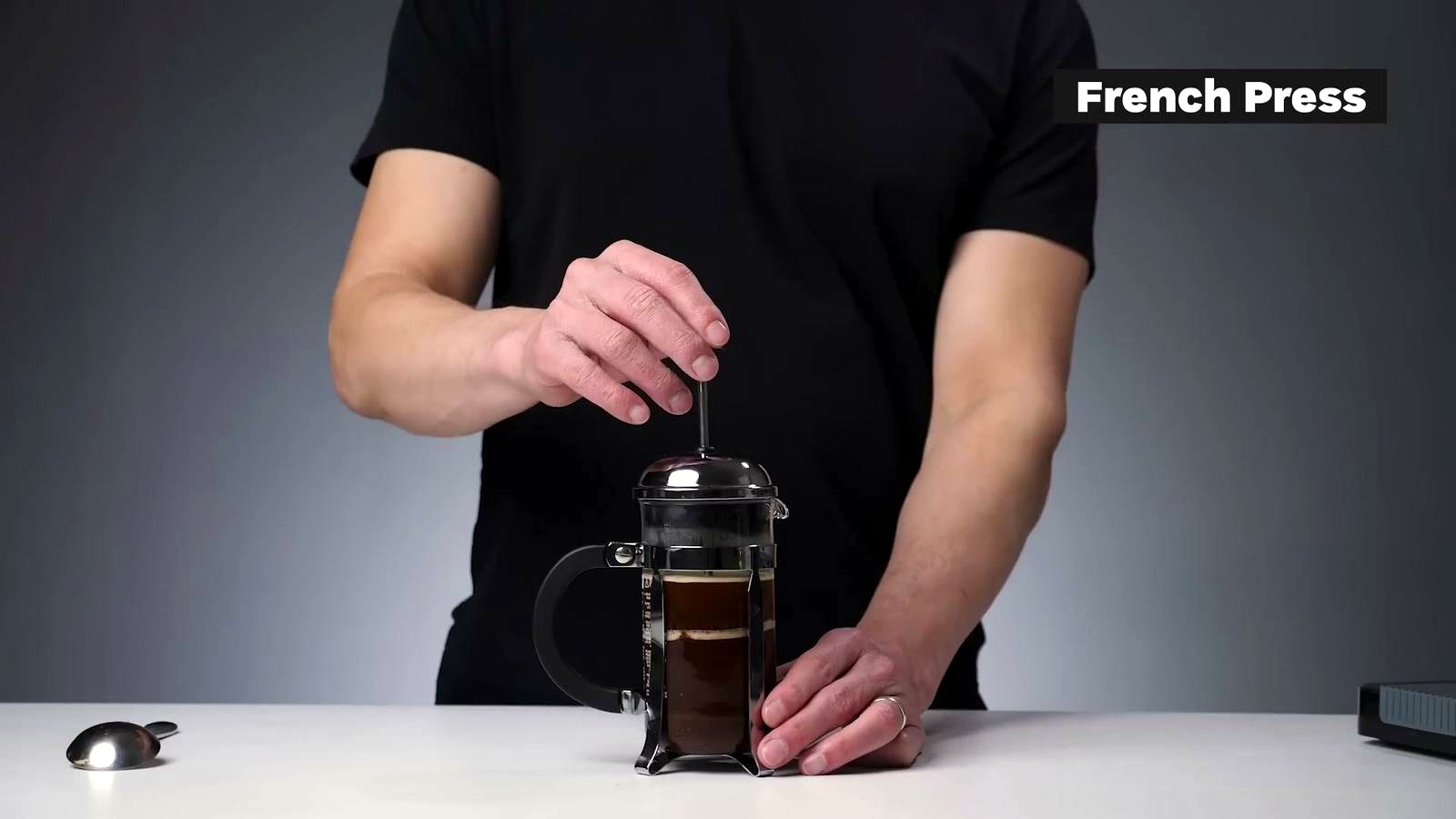
French Press is probably the most popular and most used coffee brewer in the world. It is simple and easy to use, with only two parts: a jar and a plunger with plastic or metal mesh.
To brew, you add ground coffee, pour hot water, and let it sit for a few minutes. Then you press the plunger down and pour the coffee into a cup or carafe.
The coffee from a French Press usually has a higher body. Flavors are more mixed and less transparent compared to pour over coffee, and the liquid is more cloudy because the mesh does not collect all the tiny particles the way a paper filter does. Because the coffee stays in contact with hot water the whole time, French Press belongs to the immersion brewing category.
Pros
- Easy to use
- Easy to explain to almost anybody
- No extra filters needed
- Simple pouring
- No pouring kettle or special brewing equipment needed
- Relatively cheap if you do not choose fancy versions
- Can brew bigger volumes, usually around one liter
Cons
- Difficult to clean
- Leaves sediment in the cup
- Takes longer to brew
- Not ideal if you need coffee in a minute or so
- Lacks the clarity of flavor known for pour over coffee
Pour Over
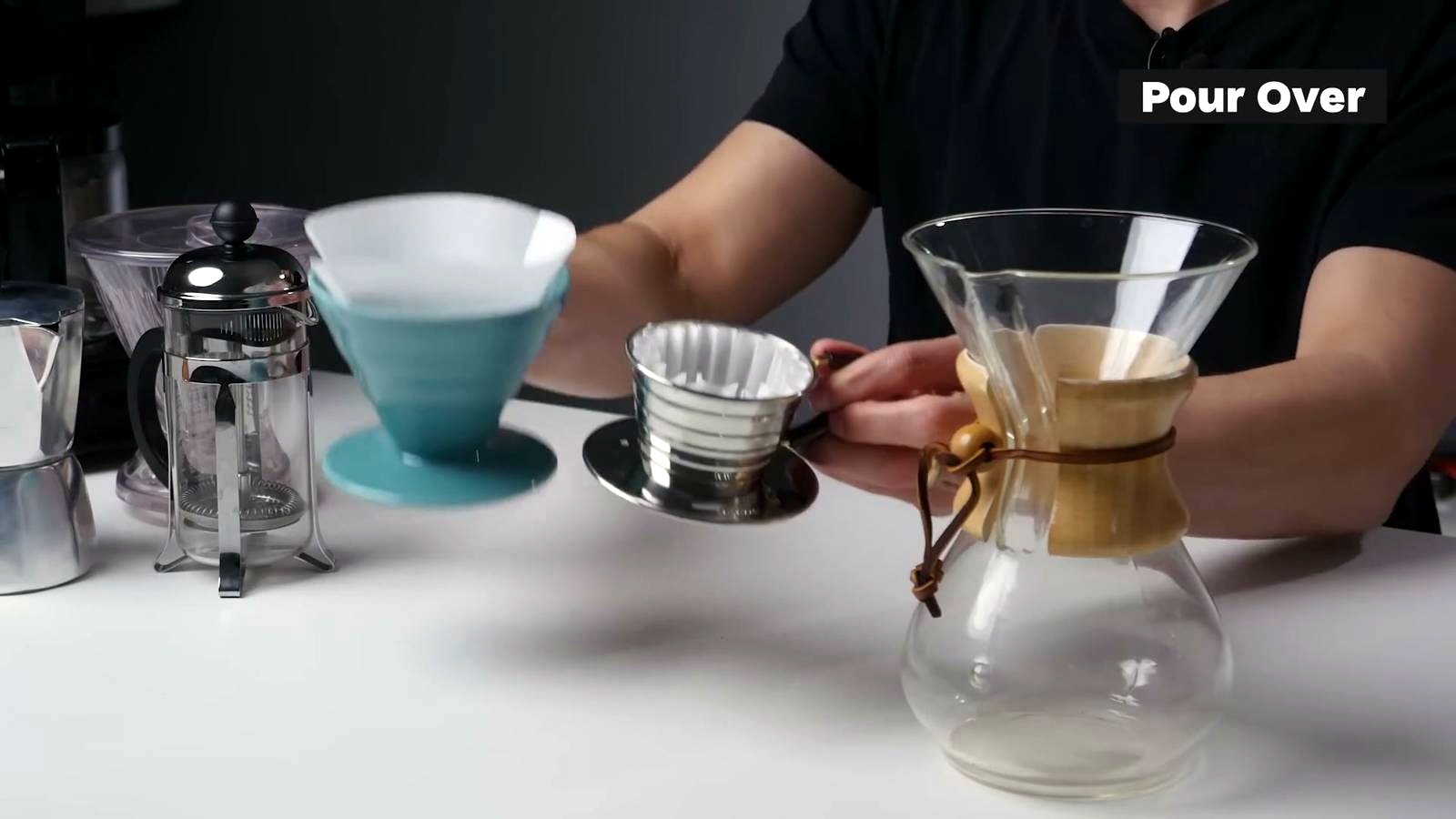
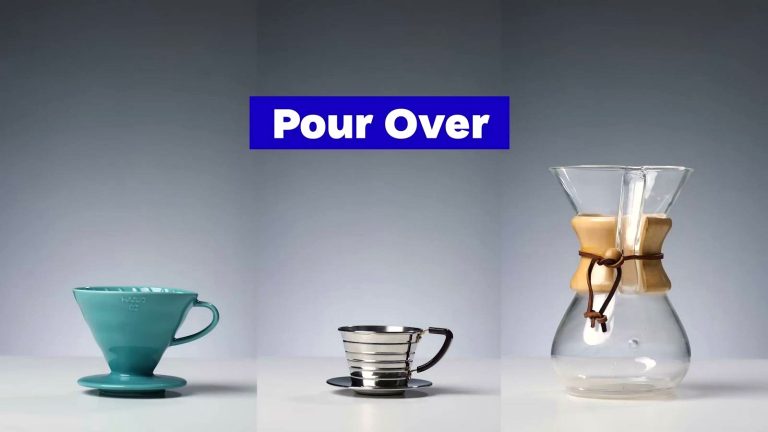
Popular pour over brewers include the Hario V60, Kalita Wave, and Chemex. What they have in common is that hot water is poured over coffee in the brewer, and the water percolates through the coffee bed, extracting flavors along the way.
All three methods use paper to filter grounds from the drink, although metal mesh or cloth are also used. Most pour overs brew coffee in two to four minutes.
There are some key differences. V60 and Kalita drippers need to be placed on a carafe or mug, while Chemex serves as both brewer and carafe. They are made from different materials: Chemex is glass, V60 can be ceramic or plastic, and Kalita is metal. Material choice affects heat transfer and durability, and in both categories plastic or metal performs better than glass and ceramic in this comparison.
The shape of the brewer and filters also differs. V60 and Chemex have a conical shape, while Kalita has a flatbed shape. This influences how water percolates through coffee and extracts flavors.
Pros
- Produces a very clean and transparent cup
- Paper filtration helps clarity
- Very popular for light roasted specialty coffees
- Gives more control over the brewing process
- Can be a ritual
- Many brewers can be considered design objects
- Basic plastic drippers are cheap
Cons
- Can be inconsistent
- More complicated technique
- Requires learning a pouring style
- Needs better equipment
- Often needs a brewing kettle and scales to dial it in
- Uses quite a lot of paper filters
- Ground quality and consistency are very important
Clever Dripper
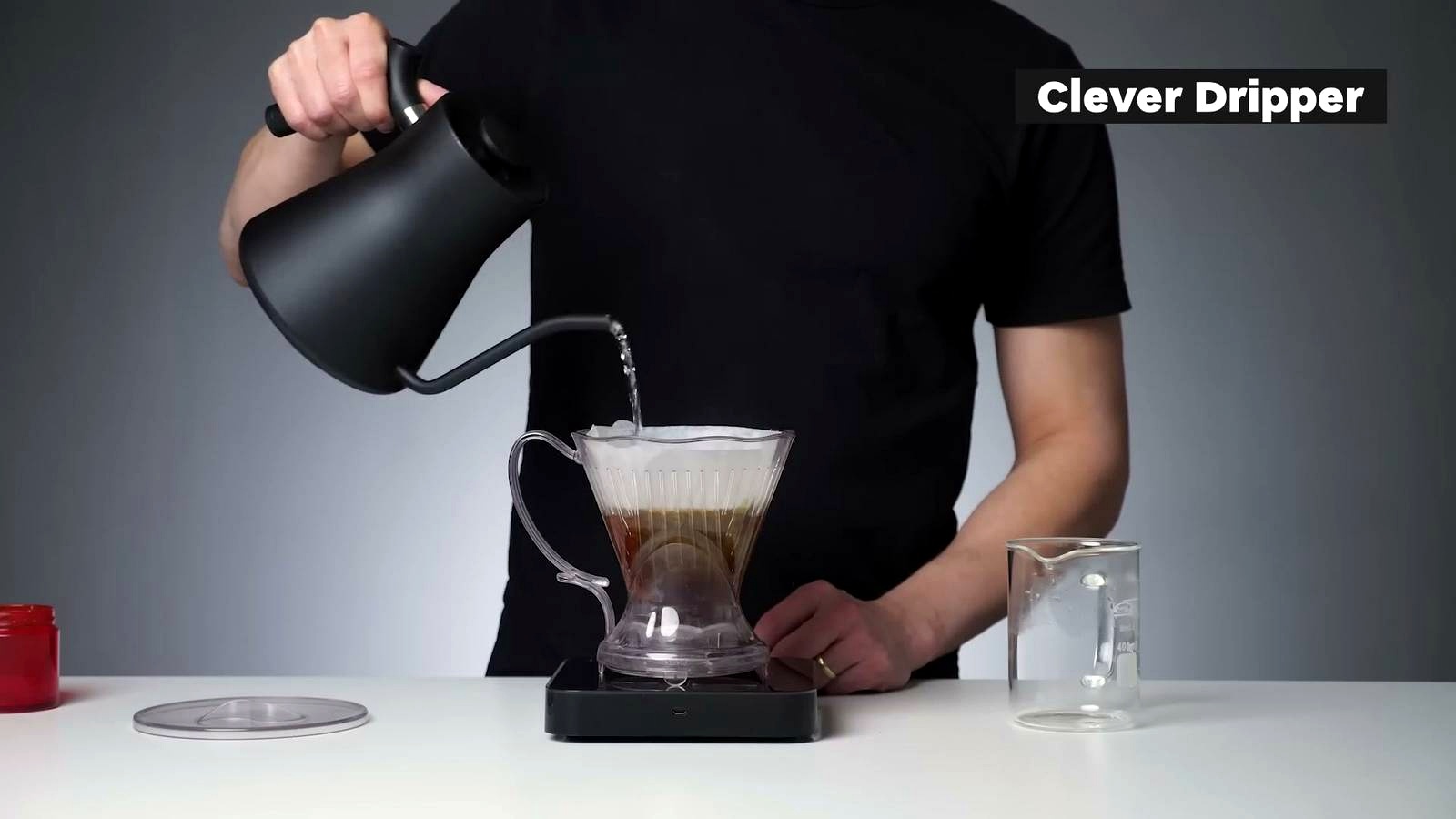
Clever Dripper is a combination of immersion brewing, like French Press, and percolation, like pour over coffee. Most of the coffee is immersed in hot water until a valve opens when the dripper is placed on a mug or carafe.
Then it starts to act more like a pour over dripper, as water passes through a bed of coffee via a paper filter into a cup or carafe. It is common to use a slightly coarser grind size than pour over, and total brew time is a little longer.
Other immersion drippers on the market include Hario Switch, December Dripper, Gina, and Wilfa purover dripper.
Pros
- More freedom to play with grind size
- Does not rely purely on gravity
- Easier to replicate than pour over
- No brewing kettle or specific coffee tool needed
Cons
- More difficult to clean properly
- Not the most beautiful coffee brewer out there
AeroPress
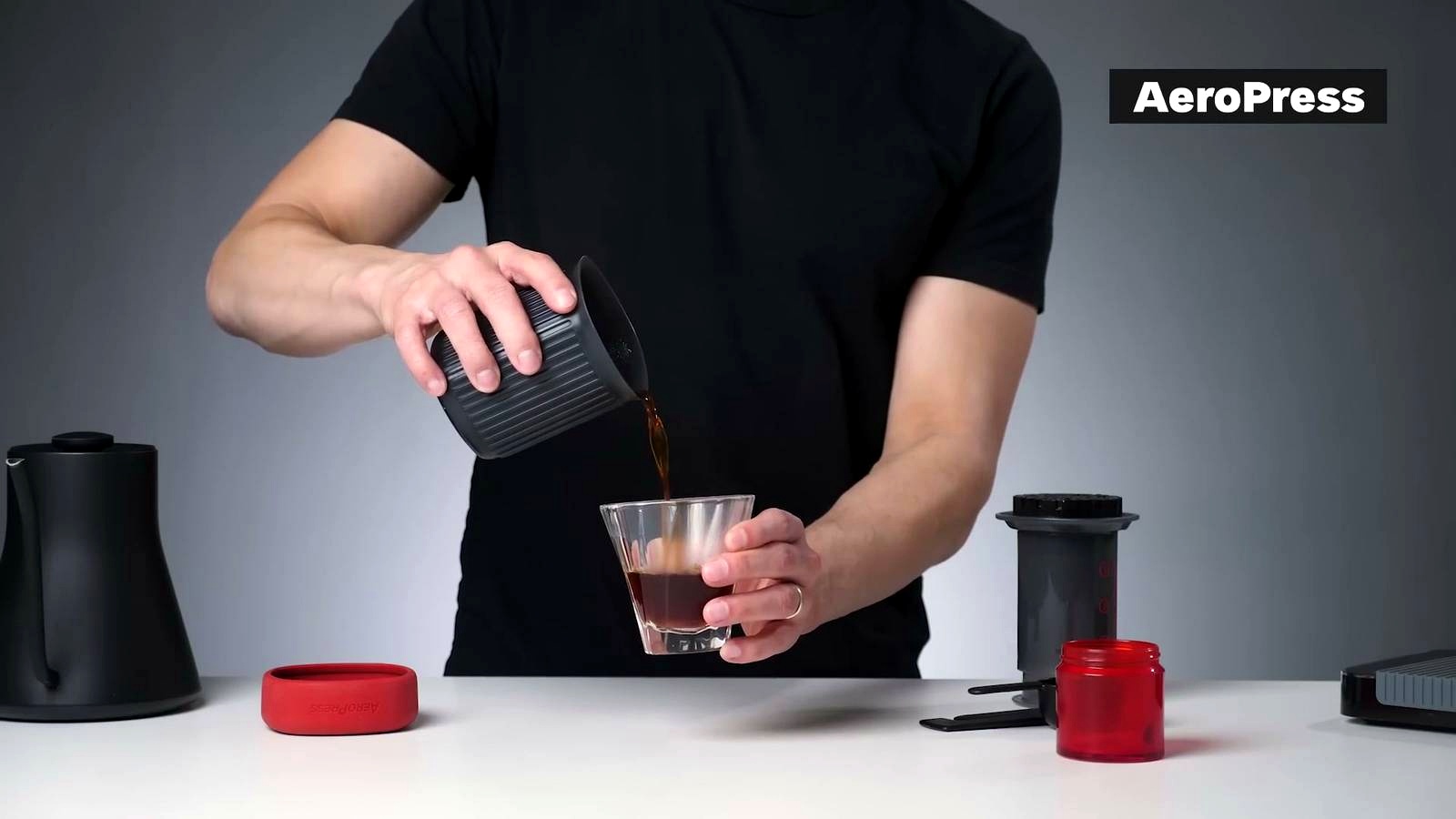
AeroPress is a pressurized immersion brewer. Unlike an espresso machine, the pressure does not come from a pump but from your hand, so the resulting cup is very different from espresso.
Because pressure and sometimes agitation are used to speed up brewing, coffee extracts much quicker than in French Press. You can expect brewed coffee in one or two minutes.
AeroPress has three key parts: the chamber, the plunger, and the basket. There are two basic brewing approaches. In the regular method, the chamber is placed on a mug or carafe, coffee and hot water are added, and then it is pressed down. In the inverted method, the brewer is used upside down, coffee and water are added, and it is turned just before pressing. There is no right or wrong way; it is a matter of preference, and there are hundreds of recipes available.
In 2019, a smaller and even more portable version called AeroPress Go was released.
Pros
- Portable
- Unbreakable
- Easy to travel with
- Can brew different kinds of coffee, from short concentrated espresso-like coffee to a big cup of black coffee
- Brews quickly
- Usually ready in one or two minutes
- Easy to clean
- Uses a very small paper filter, so there is less waste
- Many accessories are available, such as Prismo, Puck Puck for cold drip, metal filters, and brewing stands
Cons
- Brews only a limited amount, around 200 to 250 ml
- Can feel awkward at the beginning
- The number of recipes can be confusing at first
- Coffee is a little cloudy, especially compared to pour over
Moka Pot
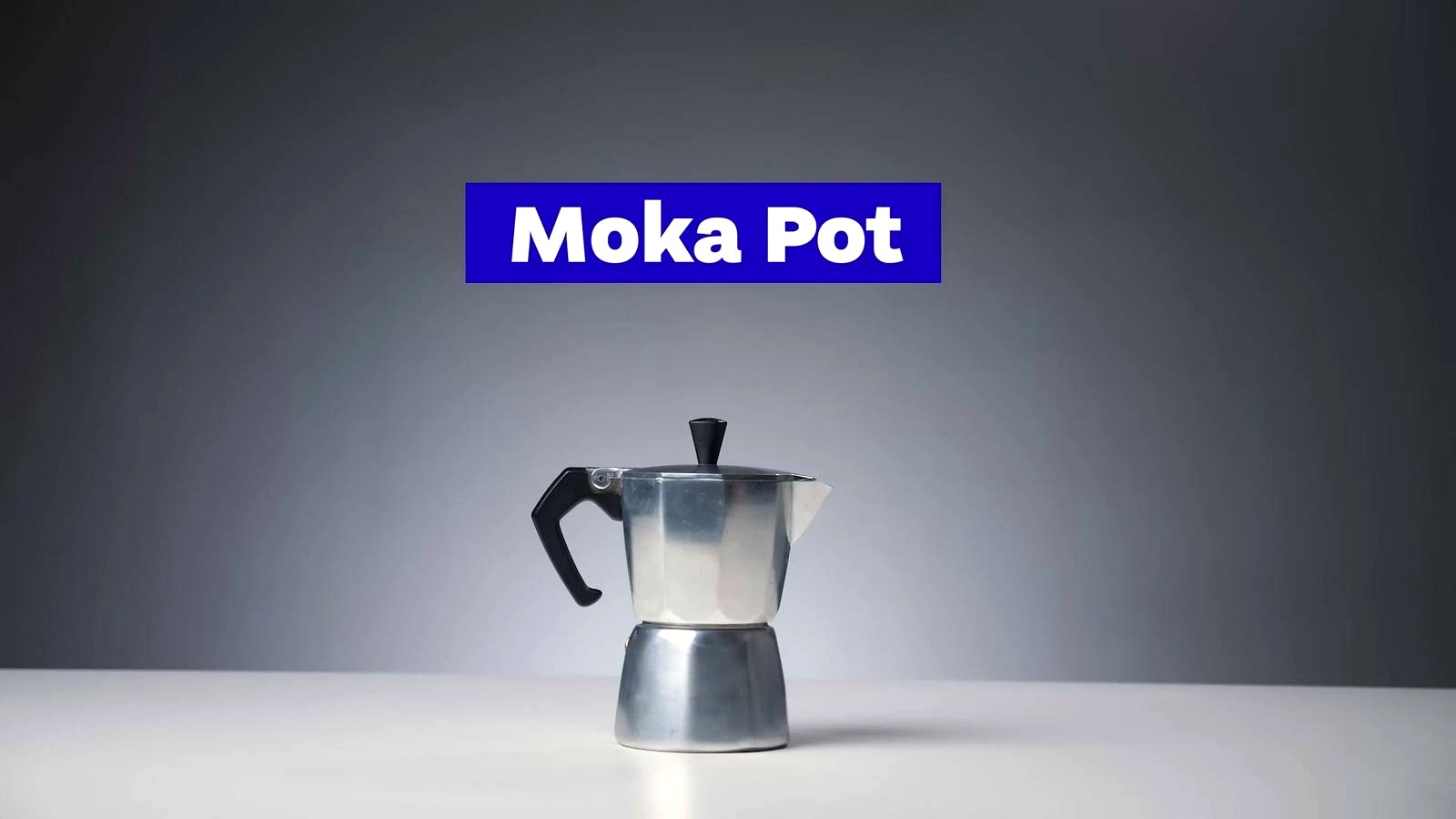
Moka Pot is an iconic Italian stovetop coffee maker that became popular not only in Europe but around the world. It was invented by Italian engineer Alfonso Bialetti in 1933.
It consists of three basic parts: the bottom chamber for water, the basket for ground coffee, and the upper chamber that collects brewed coffee. Unlike pour over, which relies on gravity, Moka Pot uses steam from boiling water in the bottom chamber to push pressurized water through the coffee and into the collecting chamber.
The strength is somewhere between espresso and filter coffee, perhaps closer to espresso, which makes it a popular option for mixing with milk.
Pros
- No brewing kettle needed
- Water is heated inside the Moka Pot
- Popular for camping
- Very difficult to break
- An iconic design object featured in many famous museums of design and modern art
Cons
- Quite difficult to control brewing
- Difficult to clean
- Cleaning is often neglected
- Can be dangerous if not operated carefully because it works with boiling water under pressure
Cezve or Ibrik
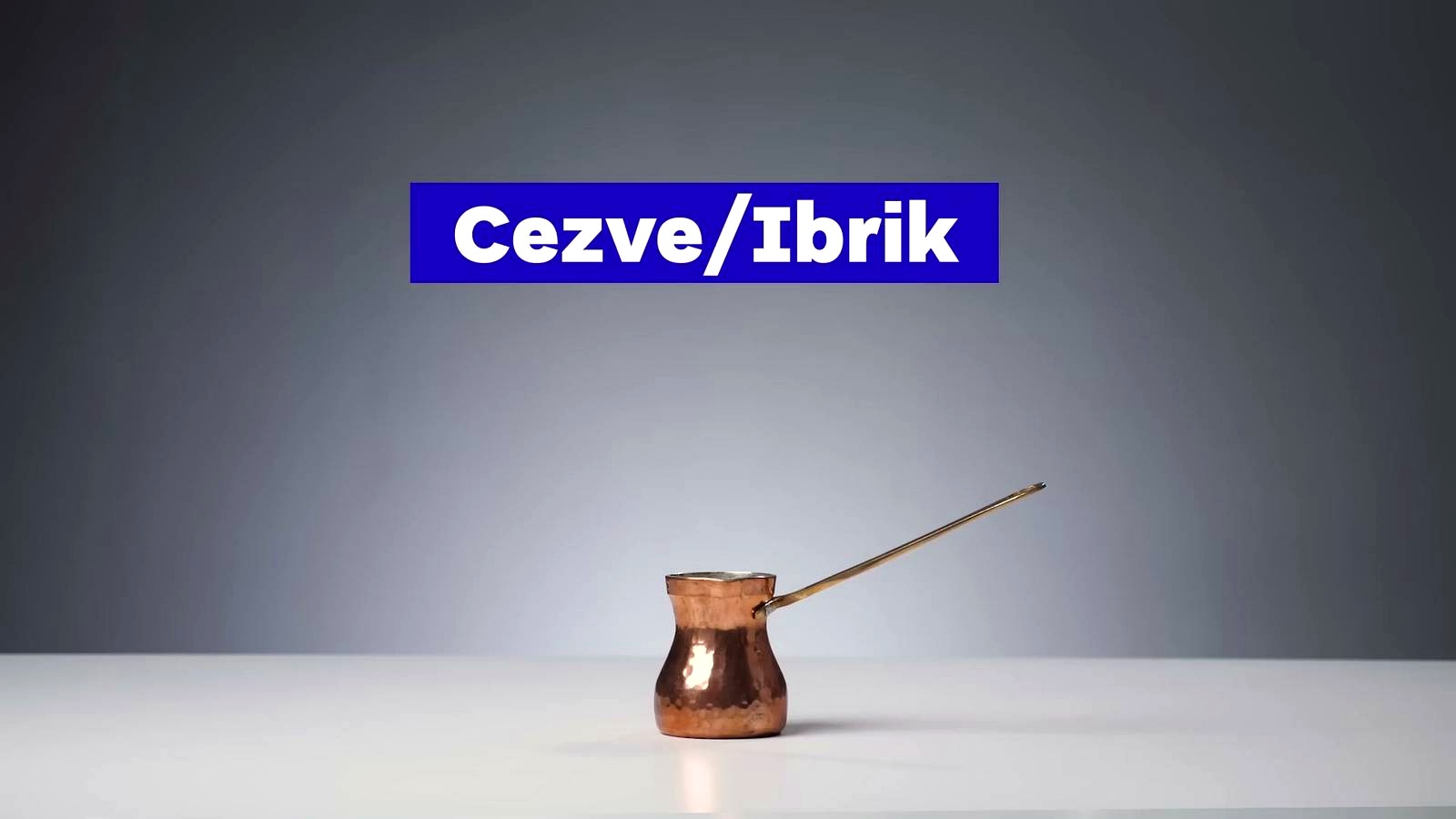
Cezve or Ibrik is an ancient brewing method that is still very popular in Balkan countries, Ukraine, Turkey, Greece, and many more. It is known for producing a small and very strong cup of coffee.
The process is simple. You need a Cezve or Ibrik, add ground coffee that must be very fine, finer than espresso, then add water. The coffee-to-water brew ratio is 1:10. Traditionally, it is brought to the boil, but in a more modern approach it is stopped just before that.
Everything is then poured into a cup. It is an unfiltered method, so grounds remain in the cup, but because the grind is very fine, they sink to the bottom. The coffee is very hot after brewing, so it needs time before it reaches drinking temperature.
Pros
- Simple and straightforward
- A beautiful ritual
- A copper Cezve is a beautiful object to use
- No filters needed
Cons
- Can get easily over extracted
- Needs a very fine grind size
- Requires either a universal high-end grinder or a dedicated grinder
- Brews a relatively small amount at a time
Coffee Drip Machine
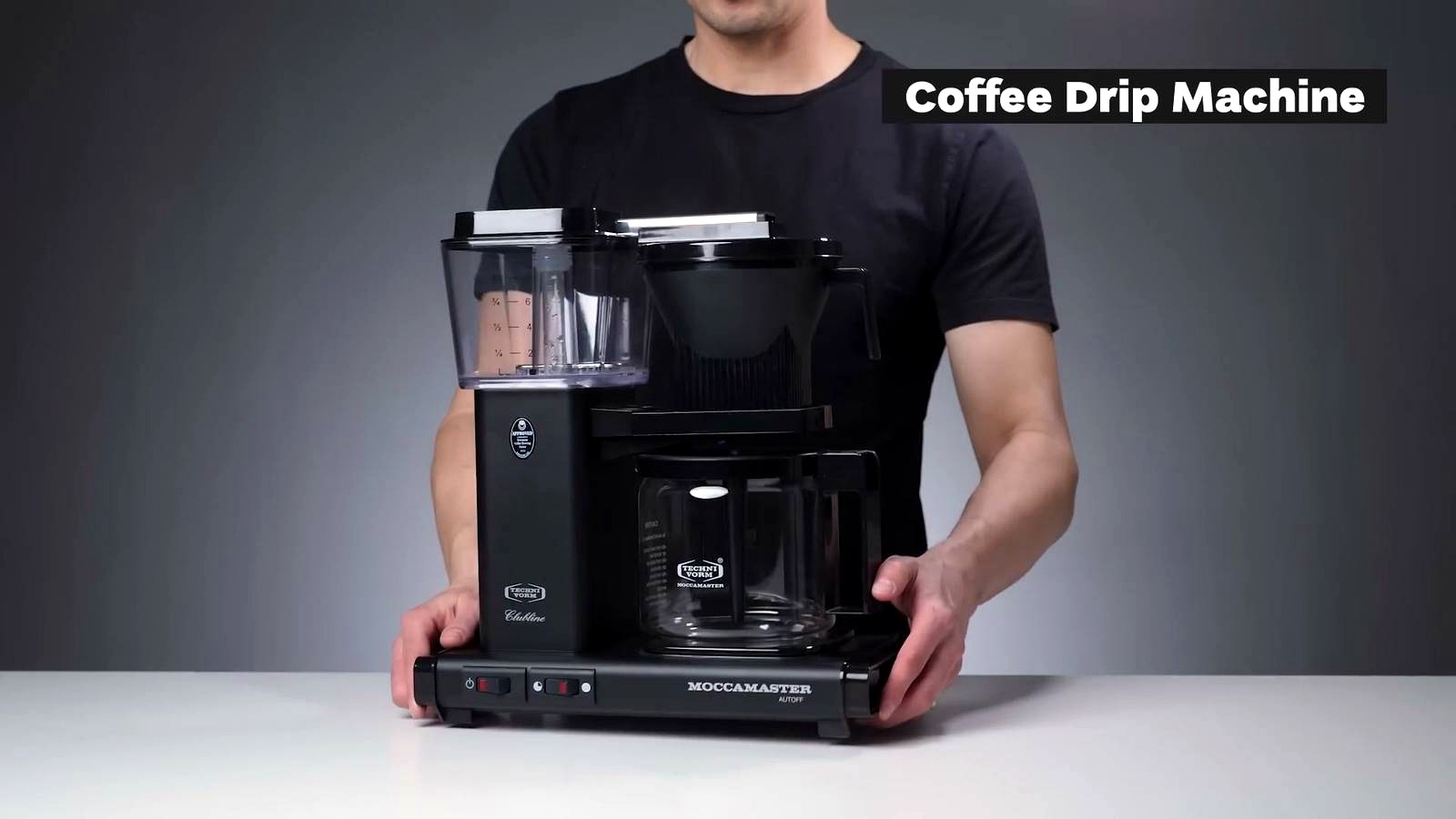
Coffee drip machines, or batch brewers, are basically automatic machines for pour over coffee. They vary in style, function, and price.
One example mentioned here is the Technivorm Moccamaster. It does not offer many features, but it is known for longevity, temperature stability, and quality of materials. It can brew up to one and a half liters of black coffee at a time.
Pros
- Simple to use
- Just add ground coffee, water, and turn it on
- No electric brewing kettle needed
- Brews more consistently than hand brew
Cons
- More difficult to keep clean, especially if you use thermoses
- Less control over brewing parameters
- More expensive than a simple pour over dripper
- Takes more space on the counter
Espresso
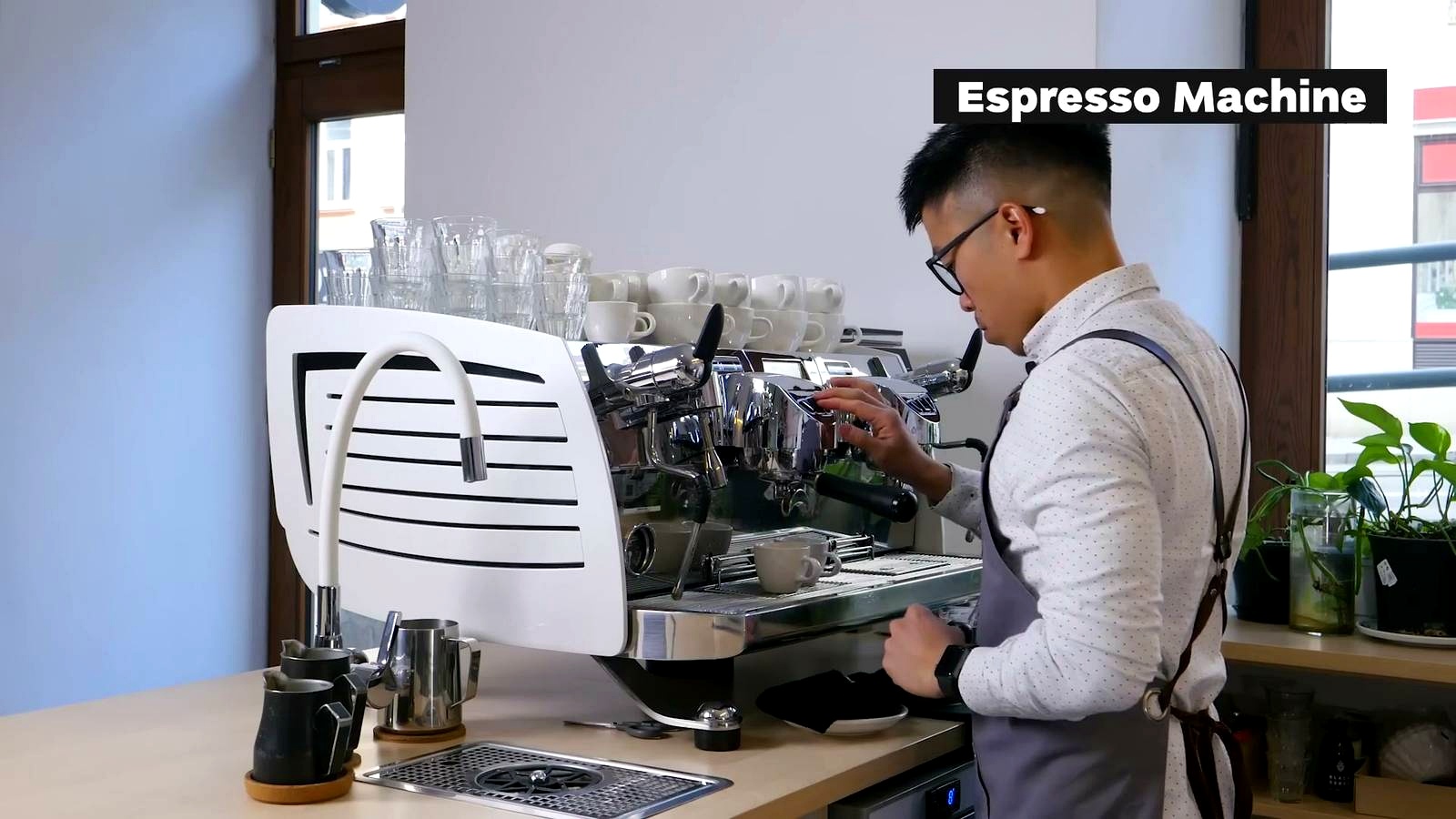
Espresso is strong concentrated coffee with crema, brewed quickly under high pressure in an espresso machine. It is arguably the most complicated way of brewing coffee at home.
There are three basic options. A manual espresso machine requires manual force to press hot water over ground coffee. An automatic espresso machine uses a pump to press water over the coffee bed. A super automatic espresso machine has a built-in grinder and is controlled with a button.
All three options are much more expensive than the methods mentioned earlier. If you choose super cheap machines, they will most probably either break quickly or not extract coffee properly.
Pros
- Once set up and calibrated, it brews very quickly
- Well extracted espresso tastes amazing
- A good base for espresso drinks
Cons
- Espresso machines are generally expensive
- Unless you choose super automatic machines, you need to learn how to dial in espresso
- You need an espresso grinder, which is usually more expensive
- Cleaning and maintenance are very important and more labor intensive
Coffee Capsules
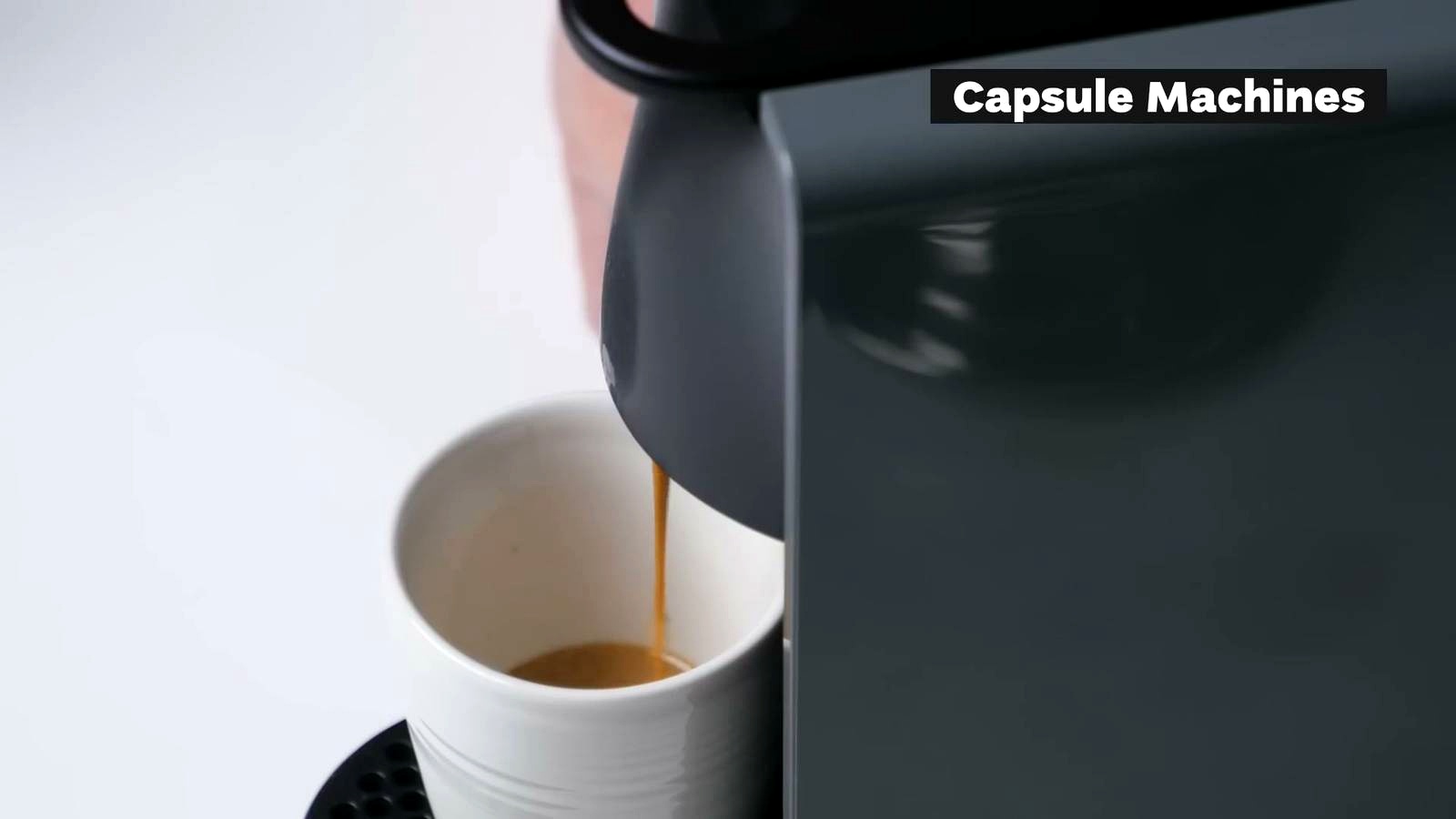
A coffee capsule is a pre-dosed single-use container of ground coffee. For Nespresso-compatible capsules, it is typically around 5.5 grams.
Although pre-ground coffee is not usually suggested, this method is included because brewing espresso-like coffee at home is rather complicated for many people. The process is simple: pour cold water into the tank, turn on the machine to heat up, insert the coffee capsule, and push the button.
Heated water is pressed against the capsule, which serves as a pressurized brewing basket, into the cup. The brewed coffee has a thin crema and a strength like lungo or diluted espresso. If specialty coffee capsules are used, it can be aromatic, delicate, and fruity.
After Nespresso patents expired, more coffee roasters started exploring this space. Colona Coffee in the UK was pioneering specialty coffee capsules in Europe. Rare coffee projects like Savage Coffee were also mentioned for bringing competition lots from their own farm in Panama.
Pros
- Extremely easy to use
- User friendly
- No other equipment needed
- Brews very fast
- Relatively easy to clean
Cons
- It is not espresso coffee
- It is not fresh coffee
- It is pre-ground and pre-dosed, so it ages
- Produces more waste because each dose is packed separately
- Per gram of coffee, it is the most expensive option
The Most Important Part: The Coffee Itself
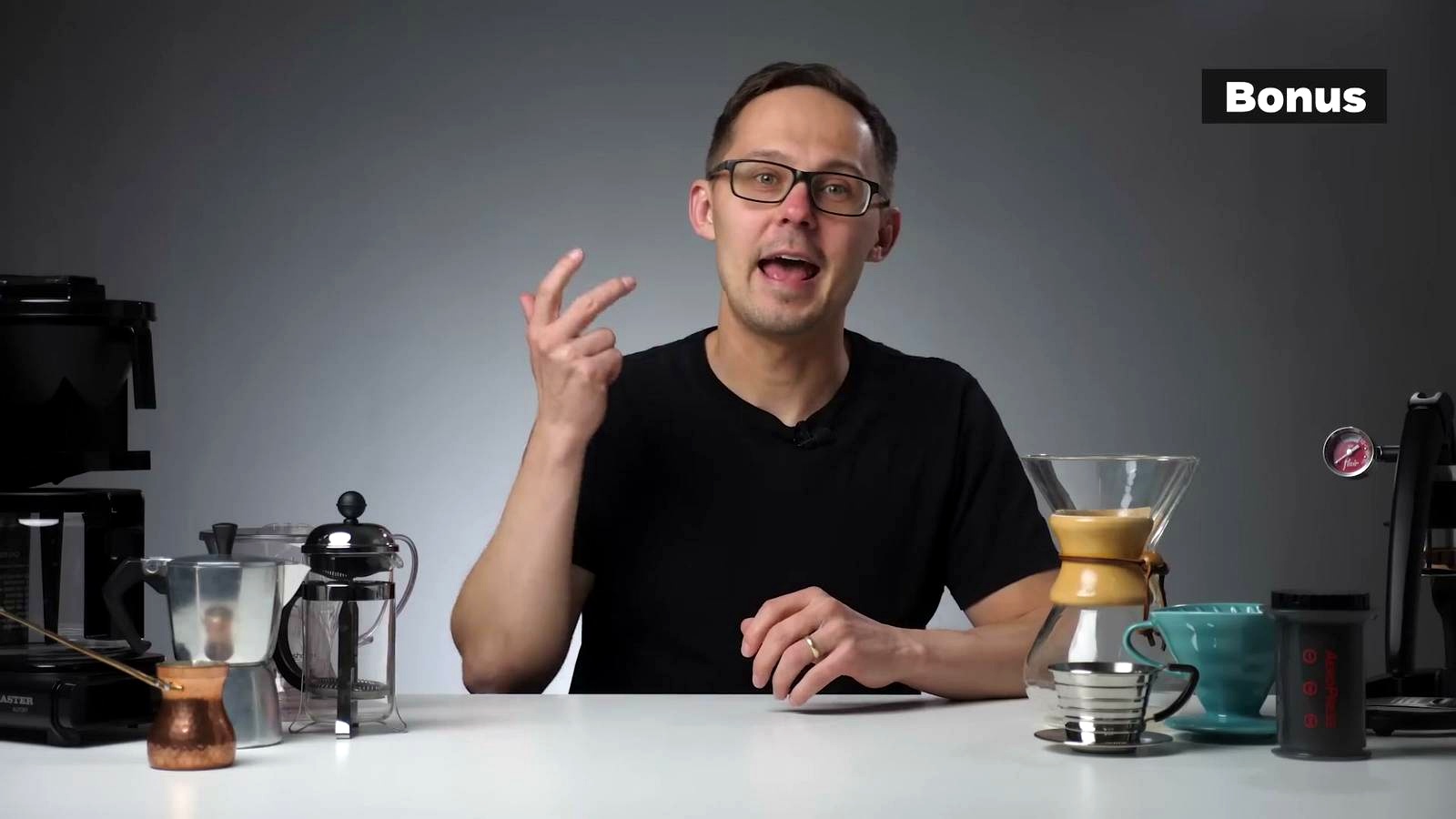
After comparing all these brewing methods, one point stands above the rest: the most important factor for actual taste is the coffee you start with. No coffee brewer or machine will improve the taste of your coffee on its own.
Instead of spending big money on machines, it is worth paying attention to the beans you buy. Important parameters mentioned here are quality, freshness, and roast level.
Quality:
Specialty coffee grade is used for brewing in the office for these videos, so it may be worth looking for a specialty coffee roaster where you live.
Freshness:
It is good to know when the coffee was roasted and not wait too long before brewing it, because coffee ages and loses its characteristics and qualities over time.
Roast level:
This matters because each brew method extracts coffee differently and needs a slightly different roast style.
Another important point is grinding. If coffee is not ground fresh just before brewing, a lot of its potential is lost. If possible, getting the best grinder you can afford, whether hand or electric, is strongly encouraged.
Standart Magazine

The sponsor mentioned is Standart, an independent print magazine about coffee culture and the people around it.
A new issue, number 22, included a sample of Ethiopian coffee roasted by Lot 61 Amsterdam. The issue featured an underlying theme of animals, including a long-form essay about cat café culture, questions about the ethical aspects of Kopi Luwak coffee, and a story about a farmer from England who specializes in producing milk for coffee.
Highlights also included an article portraying Japan as a coffee-producing country, talking about the first specialty coffee lots grown there, and Scott Rao’s recipe for the fruitiest espresso you will ever try. A yearly subscription covers four issues, free worldwide shipping, and coffee samples from some of the best roasters in the world.
FAQ
What is the easiest coffee brewing method for beginners?
French Press is described as very simple and easy to use. Coffee capsules are also extremely easy to use and user friendly.
Which method makes the cleanest and most transparent cup?
Pour over produces a very clean and transparent cup thanks to paper filtration.
Which methods brew coffee quickly?
AeroPress usually makes coffee in one or two minutes. Espresso also brews very quickly once set up and calibrated, and coffee capsules brew very fast.
Which methods can make larger amounts of coffee?
French Press can brew bigger volumes, usually around one liter. Coffee drip machines such as the Technivorm Moccamaster can brew up to one and a half liters at a time.
What matters most for coffee taste?
The most important factor is the coffee you start with. Quality, freshness, roast level, and grinding coffee fresh just before brewing all matter.
Content Source

Surfer, doer, band member, Saul Bass fan and screen printer. Making at the junction of modernism and computer science to craft delightful brand experiences. German award-winning designer raised in Austria & currently living in New York City.